Memory Diagram Practice
Conditionals
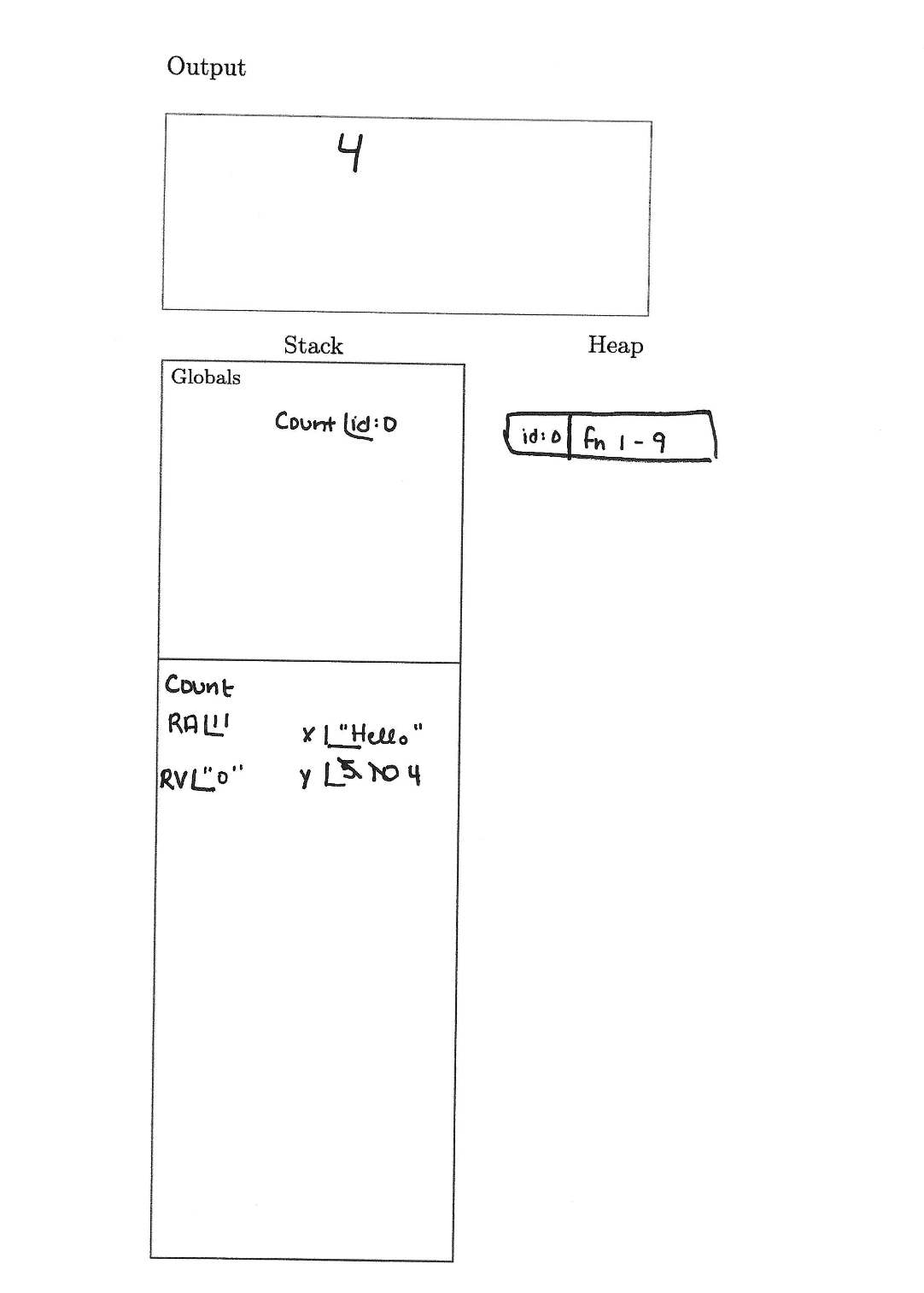
- Trace a memory diagram of the following code listing.
    def count(x: str) -> str:
        """Practice conditionals."""
        y: int = len(x)
        if y % 4 == 1:
            y = y * 2
        y = y - 6
        print(y)
        return(x[y])
        print(x[y])

    count(x="Hello")
SHOW SOLUTION
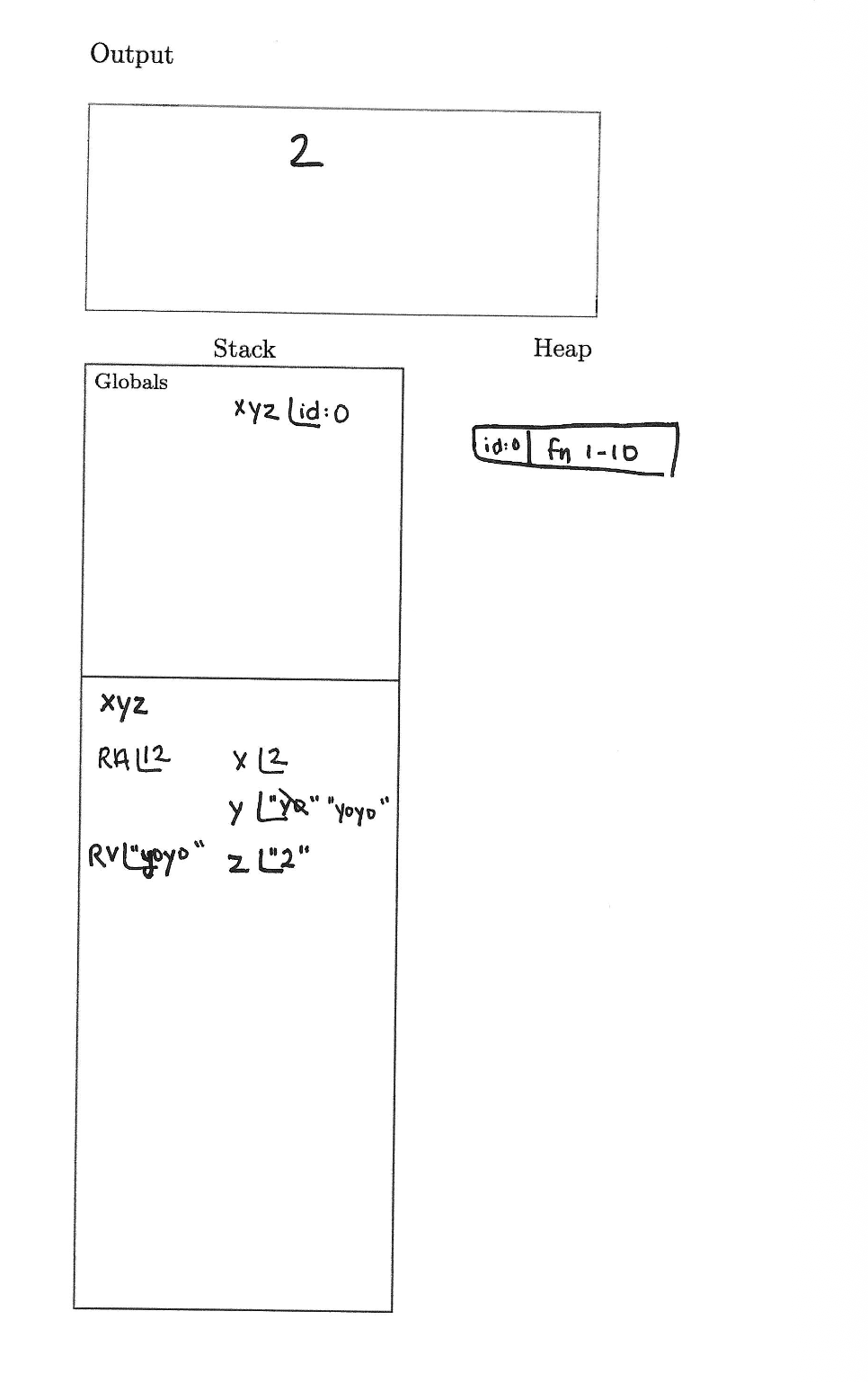
- Trace a memory diagram of the following code listing.
    def xyz(x: int, y: str) -> str:
        """Practice conditionals."""
        z: str = str(x)
        if len(y) > 1:
            y = y * x
        else:
            y = "no"
        if x > 0:
            print(z)
        return y

    xyz(x=2, y="yo")
SHOW SOLUTION
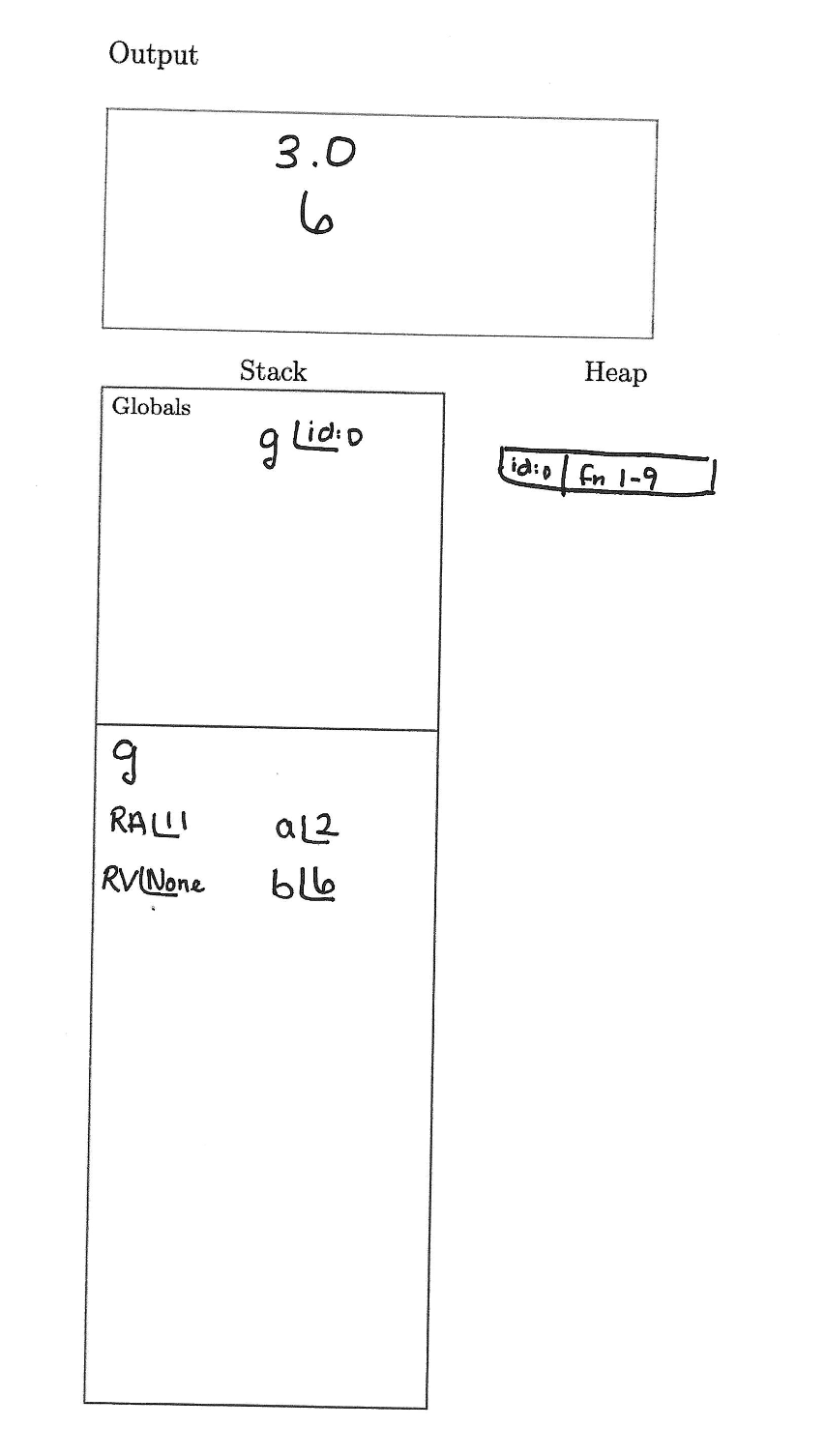
- Trace a memory diagram of the following code listing.
    def g(a: int, b: int) -> None:
        """Practice conditionals."""
        if a > b:
            print(a-b)
        elif b < 10:
            print(b/a)
        else:
            print(a+b)
        print(b)

    g(a=2,b=6)
SHOW SOLUTION
Recursion
Note: The following questions are more challenging than what will be on the quiz, especially the second one, in order to help you be very well prepared to tackle similar questions in a quiz environment. Attempting the first question is highly recommended, but the second question should be treated as optional additional practice.
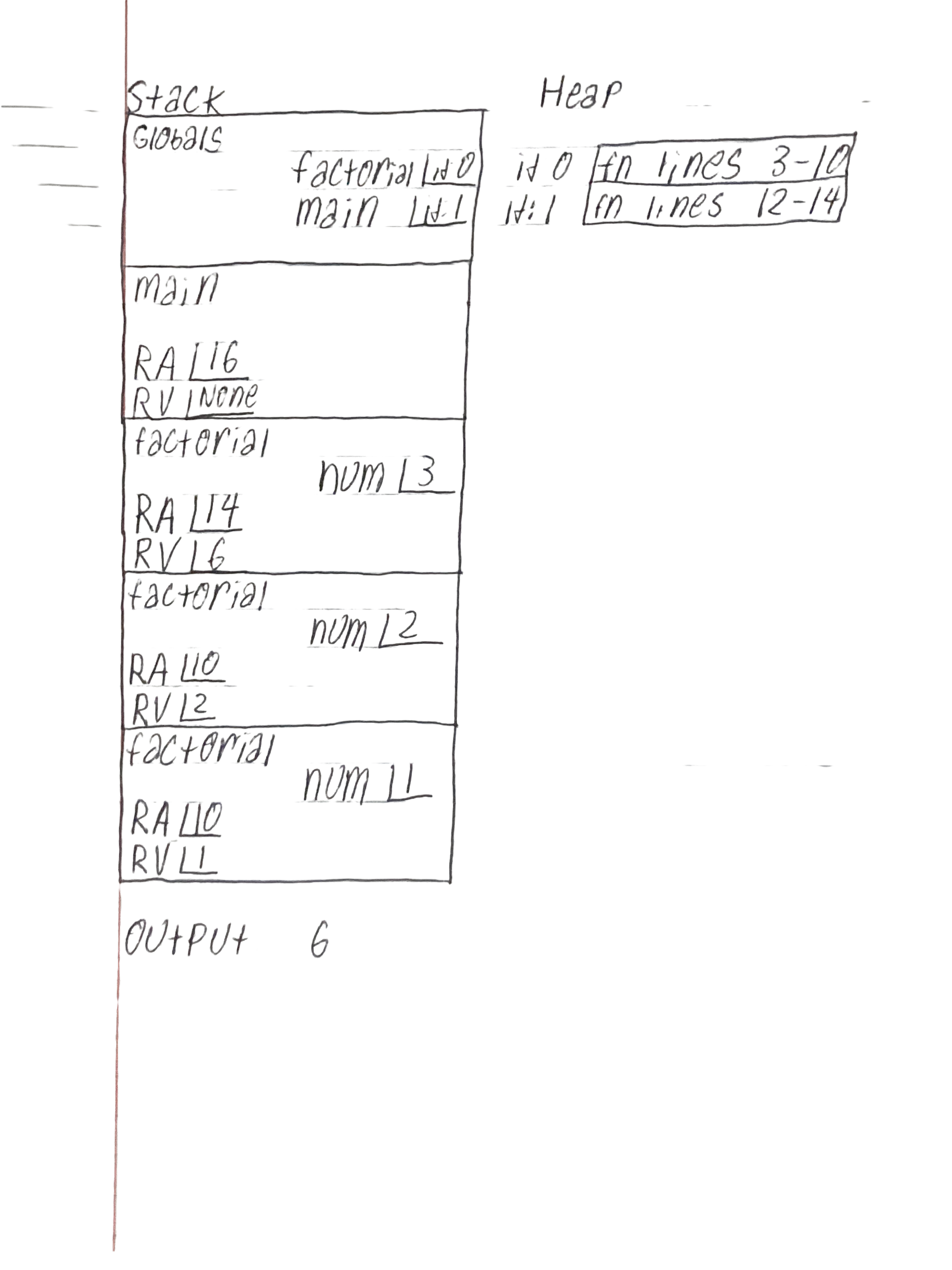
- Create a memory diagram for the following code snippet. Additionally, identify the lines where the edge case, base case, and recursive case occur (this will generally consist of a conditional statement, a return statement, and possibly more lines of code in between).
    """Recursion practice!"""

    def factorial(num: int) -> int:
        """Calculate the factorial of num."""
        if num <= 0:
            return 1
        elif num == 1:
            return 1
        else:
            return num * factorial(num=num - 1)

    def main() -> None:
        """The main function."""
        print(factorial(num=3))

    main()
SHOW SOLUTION
The edge case occurs on lines 5-6, the base case occurs on lines 7-8, and the recursive case on lines 9-10.
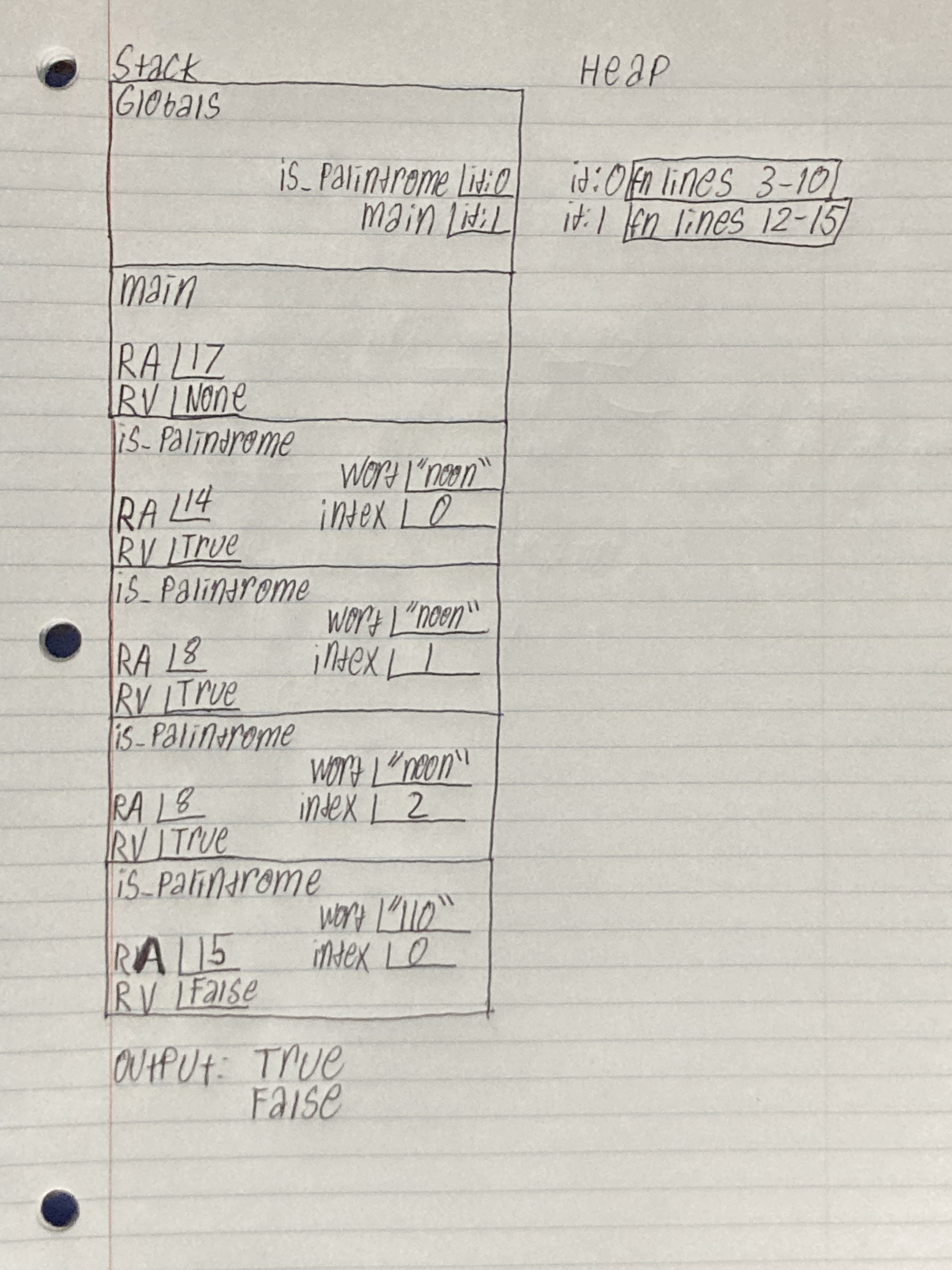
- Challenge Question: Create a memory diagram for the following code snippet. Identify which lines that base case(s) or recursive case(s) occur on.
    """Recursion practice with palindromes."""

    def is_palindrome(word: str, index: int) -> bool:
        """Returns True if word is a palindrome and False otherwise."""
        if index >= int(len(word) / 2):
            return True
        elif word[index] == word[len(word) - (index + 1)]:
            return is_palindrome(word=word, index=index + 1)
        else:
            return False

    def main() -> None:
        """The main function."""
        print(is_palindrome(word="noon", index=0))
        print(is_palindrome(word="110", index=0))

    main()
SHOW SOLUTION
The base cases occur on lines 5-6 and 9-10. If you reach the base case on lines 5-6 that means you made it through the whole word without finding any differences between letters that should be the same, so you can return True as the final result. If you make it to lines 9-10, that means a difference was found between letters that should be the same, so word is not a palindrome. The recursive case is on lines 7-8.